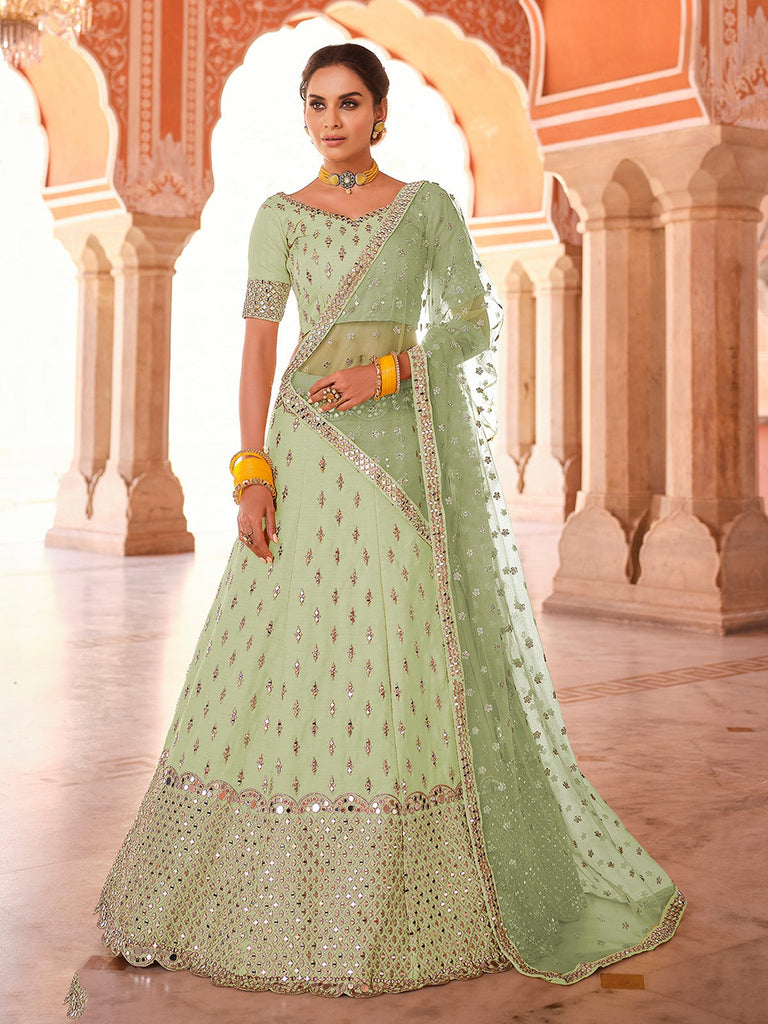
Indian ethnic wear descriptions use several terms for surface decoration, and it pays to understand what a seller actually promises. The six INAYA 7055 ClothsVilla lehenga choli listings describe zari and sequin embroidery on art silk with a soft net dupatta. This guide explains how to read those claims without inventing a specific artisan, technique, metallic content, hand-work guarantee or regional origin. Ten genuine product photographs are linked to their respective listings so readers can review the visible details themselves.
What does zari describe?
Zari is a broad term for metallic-looking threads or embellishment used in Indian textiles. Its composition and application can vary widely. An online listing that says zari work does not, by itself, establish that the thread contains real gold or silver, that the design was woven rather than embroidered, or that it was entirely worked by hand. The verified INAYA 7055 description simply says zari and sequin embroidery. If exact composition or workmanship matters to you, seek confirmation from the seller rather than assuming it from the word zari.

What do sequins add to the design?
Sequins are small reflective decorative elements that can catch light. Their shape, attachment and density differ by design. A photograph is useful for assessing their overall visual effect, but it may not reveal every stitch or identify the embellishment material. View several angles of a product and avoid treating every reflective detail as precious metal. Choose jewellery that works with the amount of visual interest already present in the fabric.


Fabric terminology deserves equal attention
The supplier calls the lehenga and blouse fabric art silk and the dupatta soft net. Art silk is a descriptive category and should not automatically be read as pure silk, a specific fibre composition or a particular care label. Soft net describes the dupatta fabric rather than the entire three-piece outfit. The listing does not establish a particular silk blend, fabric weight, lining or machine-washability. Confirm any critical construction or care question directly before purchasing.

How colour changes the appearance of embroidery
Reflective decoration can appear quite different against blue, green, peach, pink, red or yellow. Examine each photographed colour in the actual listing rather than assuming an identical visual result across colourways. Screen calibration and lighting influence perception. These photographs demonstrate products offered for purchase, not verified claims about exact thread composition.


Do not confuse detailed decoration with a finished garment
The INAYA 7055 lehenga is semi-stitched and the art silk blouse fabric is unstitched. Although the Shopify variant reads One Size, the outfit requires tailoring. The supplier describes blouse fabric up to 42 for all colours; lehenga waist and length up to 42 for blue, green, pink, red and yellow; peach lehenga waist and length up to 43. These limits are not a universal or tailored fit guarantee. Ask a tailor to evaluate your measurements and the available fabric.

Questions worth asking the seller
- Can you confirm the exact fabric composition if it matters for your needs?
- Is the outfit hand-embroidered, machine-embroidered or mixed? Do not assume based on the photo.
- What cleaning instructions apply to this particular garment and its embellishment?
- Does the available blouse fabric support your planned neckline and sleeves?
- What are current availability, shipping and exchange conditions?
For two additional actual product views, compare green and red rather than assuming any two colourways are photographed identically.


Compare confirmed specifications in the ClothsVilla six-colour guide, and use the individual products for current prices and inventory. Care, artisan origin and exact material composition should not be guessed from marketing language.